Rosacea treatment in Wrocław
Rosacea is a chronic skin condition of the face with redness, papules and visible blood vessels, which flares with sun, temperature or spicy food. At Luna Clinic in Wrocław dermatologist Katarzyna Cygan, MD, PhD, tailors treatment to the type of rosacea: topical, oral and laser treatment of the redness.
Rosacea is a chronic skin condition of the face with redness, papules and visible blood vessels, which flares with sun, temperature or spicy food. At Luna Clinic in Wrocław dermatologist Katarzyna Cygan, MD, PhD, tailors treatment to the type of rosacea: topical, oral and laser treatment of the redness.
Indications
Rosacea is an indication for dermatological treatment in the case of persistent facial erythema, especially around the nose, cheeks, forehead and chin. The disease often worsens under the influence of factors such as stress, temperature changes or sun exposure. The treatment aims to reduce inflammation, reduce redness and improve the patient’s comfort of life.
Dilated capillaries on the face, typical of rosacea, are another indication for therapy. Laser treatments such as IPL (Intense Pulsed Light) effectively reduce the visibility of the vessels and improve the appearance of the skin. Combined with appropriate care and topical medications, the treatment effects are long-lasting.
Patients with rosacea often have papules and pustules that resemble acne lesions but are the result of chronic inflammation. Treatment includes topical anti-inflammatory preparations such as metronidazole or azelaic acid and, in more severe cases, oral antibiotics. The goal is to reduce the lesions and prevent recurrences.
In advanced stages of rosacea, overgrowth of the sebaceous glands on the nose may occur, leading to skin deformation (rhinophyma). Treatment includes laser therapy, dermabrasion or surgical removal of the overgrowths. Early intervention prevents the progression of the disease and improves facial aesthetics.
Factors aggravating rosacea
Rosacea can worsen under the influence of many external and internal factors. The most common include stress, temperature changes, intense physical exercise, hot drinks, alcohol and spicy food. UV radiation, wind or the use of aggressive cosmetics can also cause a worsening of symptoms. Identifying and avoiding these factors is a key element in controlling the disease.
The importance of diet in rosacea therapy
Diet plays an important role in relieving the symptoms of rosacea. Avoiding products that can trigger skin inflammation, such as processed food, alcohol or caffeine, can bring improvement. Foods rich in antioxidants and omega-3 fatty acids are recommended, as they have an anti-inflammatory effect and support skin regeneration. Regular consultations with a dermatologist and dietitian can help develop a nutrition plan that supports therapy.
Modern methods of treating rosacea
In addition to traditional treatment methods, modern dermatology offers advanced therapies such as laser therapy or IPL (Intense Pulsed Light) treatments, which reduce erythema and telangiectasias. In more advanced cases, photodynamic therapy or the use of VEGF inhibitors, which reduce the hyperreactivity of blood vessels, can be considered. These innovative methods often give faster and longer-lasting results in controlling the symptoms of rosacea.
Frequently asked questions
How does rosacea differ from ordinary acne?
Rosacea is a chronic vascular-inflammatory disease mainly affecting the central part of the face after the age of 30. Instead of blackheads, erythema, telangiectasias and papules and pustules on an erythematous background dominate.
What aggravates the symptoms of rosacea?
Most often the sun, stress, alcohol (especially red wine), spicy seasonings, hot drinks, the sauna, frost and wind, and some cosmetics. Identifying your own triggering factors is the basis of therapy.
How is rosacea treated at Luna Clinic?
We combine pharmacological treatment (metronidazole, ivermectin, azelaic acid, in more severe forms oral antibiotics) with laser therapy for erythema and capillaries and individually selected care.
Can rosacea be cured permanently?
It is a chronic and recurrent disease - the goal of treatment is long-term remission: reduction of erythema, resolution of eruptions and skin comfort. Proper therapy and care make it possible to effectively control the symptoms.
What care is recommended for rosacea?
Gentle cleansing emulsions, creams that strengthen the barrier and vessels, daily SPF 50 and avoiding alcohol in cosmetics, mechanical peels and warming masks.
Does the laser help with redness and capillaries?
Yes - vascular laser therapy and IPL are the most effective methods of reducing persistent erythema and telangiectasia. A series of 3-4 treatments in the autumn-winter period is usually needed.
Does diet matter in rosacea?
Yes - in many patients the symptoms are aggravated by spicy seasonings, alcohol and very hot food or drinks. Keeping a diary and eliminating individual factors can be helpful.
How long does rosacea treatment take?
The first effects are visible after 4-8 weeks of pharmacotherapy, and stable improvement is achieved within 3-6 months. Maintenance treatment and care prevent recurrences.
Can you wear make-up with rosacea?
Yes - light, mineral cosmetics without alcohol and fragrances are safe, and greenish bases neutralise redness well. Gentle make-up removal is important.
Does untreated rosacea get worse?
Yes - it can lead to fixation of the erythema, tissue overgrowth (e.g. rhinophyma - overgrowth of the nose) and eye changes. Early treatment prevents complications.
Can rosacea affect the eyes?
Yes - the ocular form manifests as burning, redness of the eyelid margins and a feeling of sand under the eyelids. It requires cooperation between the dermatologist and an ophthalmologist; report these symptoms to the doctor.
How much does rosacea treatment cost in Wrocław?
The cost depends on the scope of therapy - pharmacological treatment and a possible series of laser treatments. You will receive a plan with a quote after a dermatological consultation; indicative prices are in the price list.
Contraindications
A consultation has no significant contraindications. Any limitations concern selected treatment methods (e.g. laser vs. a tan, isotretinoin vs. pregnancy) - we will discuss them once a diagnosis is established.
How to prepare?
It is worth bringing to the visit:
- a list of medications and supplements taken
- existing documentation and test results
- a list of questions - nothing should slip your mind
- for skin lesions: do not cover them with make-up or irritate them before the visit
How does the procedure go?
We match the therapy to the form of the disease: topical treatment, oral treatment and laser closing of the erythema; we discuss the triggering factors.
Recovery and recommendations
Diagnostic visits require no recovery. For treatments (e.g. laser) you will receive brief recommendations: sun protection, gentle care and avoiding high temperatures for a few days.
Effects - when and for how long?
Effect: control of redness and lesions within a few weeks.
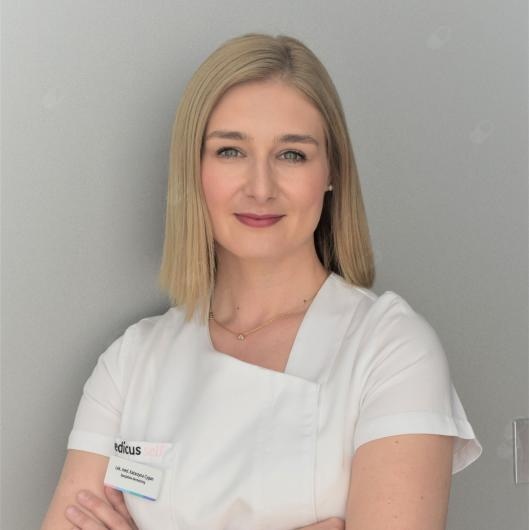
Katarzyna Cygan, MD, PhD
An experienced dermatologist and venereologist, a graduate of Wrocław Medical University. She diagnoses and treats skin diseases in patients of all ages - from dermatoscopic assessment of moles to laser therapy, microneedling radiofrequency and regenerative therapies with platelet-rich plasma. She combines dermatological and aesthetic knowledge, caring for skin that is healthy, young and natural.
Take the first step
Book a consultation - an honest conversation about expectations, possibilities and the treatment plan.
Rosacea treatment: price and consultation
Rosacea treatment is quoted individually at Luna Clinic - the cost depends on the medication and the number of laser sessions. We start with a dermatology consultation (PLN 250). Visible vessels alone are covered on the thread veins page.
How to book
Call +48 666 850 666 (Monday-Friday, 9:00-17:00) or send the consultation form. All prices: Luna Clinic price list.
Where we are
Luna Clinic, ul. Władysława Syrokomli 46, 51-141 Wrocław, Poland - in the Karłowice area of the Psie Pole district. There is parking for patients by the clinic. Directions and map